
ASTM F1951: What It Means
ASTM F1951 is a standardized test that assesses how easily a wheelchair can move across a surface. It measures the effort required to propel a wheelchair both in a straight path and while maneuvering turns. For a surface to pass, the required effort must be equal to or less than that of a control surface, which has a work value of 7.1% or below.
Why it matters: A passing score indicates the surface enables independent movement for wheelchair users and individuals using other mobility devices. F1951 focuses on real-world usability—how smoothly wheels can travel over a surface.
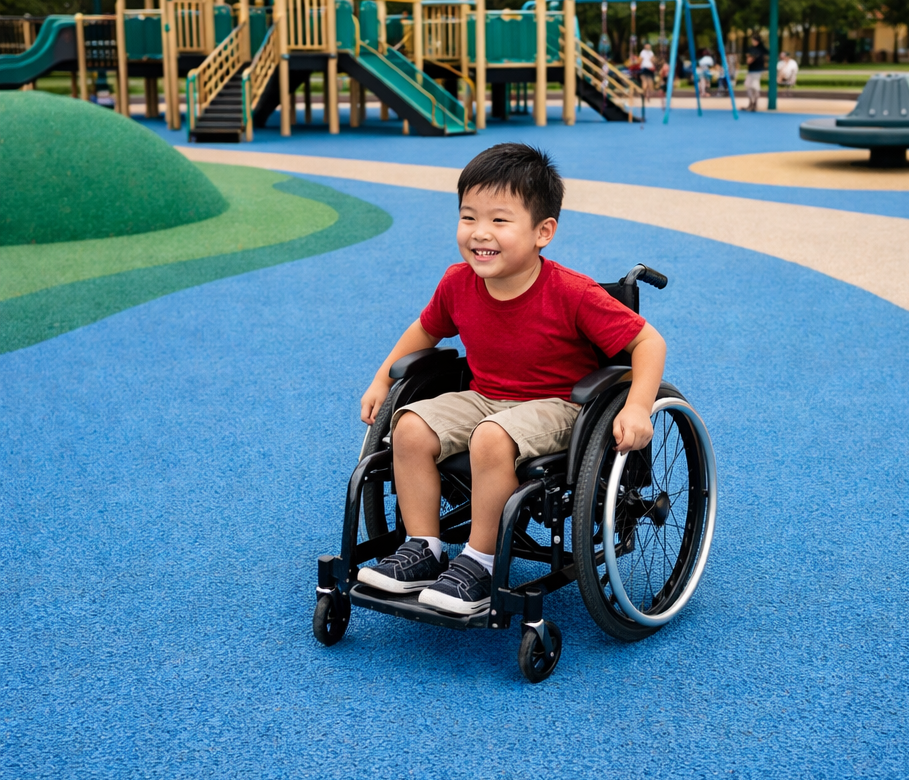
Work Ratio under 7.1% = Pass. That means the surface is as easy or easier to push across than the benchmark control.
We show both straight and turning values because the turning action is part of real play.
What to Remember: Lower numbers mean easier rolling; all FlexGround systems listed here pass in both straight and turning.
- Products: FlexGround Standard, EnduraFlex, UltraFlex, Xtreme Play, FlexPlay
-
Material:
-
Ethylene Propylene Diene Monomer Rubber (EPDM)
- Thermoplastic Vulcanized Rubber (TPV)
-
- Results:
- Straight Work: Pass
- Turning Work: Pass
- What that means: Movement (both straight and turning) requires no more effort than the control surface—smooth, predictable mobility.
- Takeaway: Our poured-in-place rubber systems offer balanced, all-around accessibility with consistent mobility.
Testing Documentation Available Upon Request
- Results:
- Straight Work: Pass
- Turning Work: Pass
- What that means: Pushing and maneuvering a wheelchair on Optimum feels comparable to a smooth control surface, with notably easier turns.
- Takeaway: FlexGrass delivers a confident roll and easy steering—great for high-traffic play areas.
Testing Documentation Available Upon Request
- Turf: ~1" mono + thatch
- Base: 4" SBR buffings over aggregate
- Infill: Stabilizing Envirofill®
- Results:
- Straight Work: Pass
- Turning Work: Pass
- What that means: Pushing and maneuvering a wheelchair on Optimum feels comparable to a smooth control surface, with notably easier turns.
- Takeaway: FlexGrass Elite delivers a confident roll and easy steering—great for high-traffic play areas.
- Turf: 1.75" Slit Film
- Base: Concrete
- Shock Pad: En-Plast ShockDrain 780
- Results:
- Straight Work: Pass
- Turning Work: Pass
- What that means: Pushing and maneuvering a wheelchair on Optimum feels comparable to a smooth control surface, with notably easier turns.
- Takeaway: Our surfacing designed for The Miracle League delivers a confident roll and easy steering—great for high-traffic play areas.
Product Description: Interlocking Rubber Tile
Material: Ethylene Propylene Diene Monomer Rubber (EPDM)
- Results:
- Straight Work: Pass
- Turning Work: Pass
- What that means: Movement (both straight and turning) requires no more effort than the control surface—smooth, predictable mobility.
- Takeaway: FlexTiles offer balanced, all-around accessibility with consistent mobility.
- Products: FlexBond Bonded Rubber
-
Material:
-
100% colored recycled shredded rubber and a single-component polyurethane
-
- Results:
- Straight Work: Pass
- Turning Work: Pass
- What that means: Movement (both straight and turning) requires no more effort than the control surface—smooth, predictable mobility.
- Takeaway: Our FlexBond bonded rubber system offers balanced, all-around accessibility with consistent mobility.
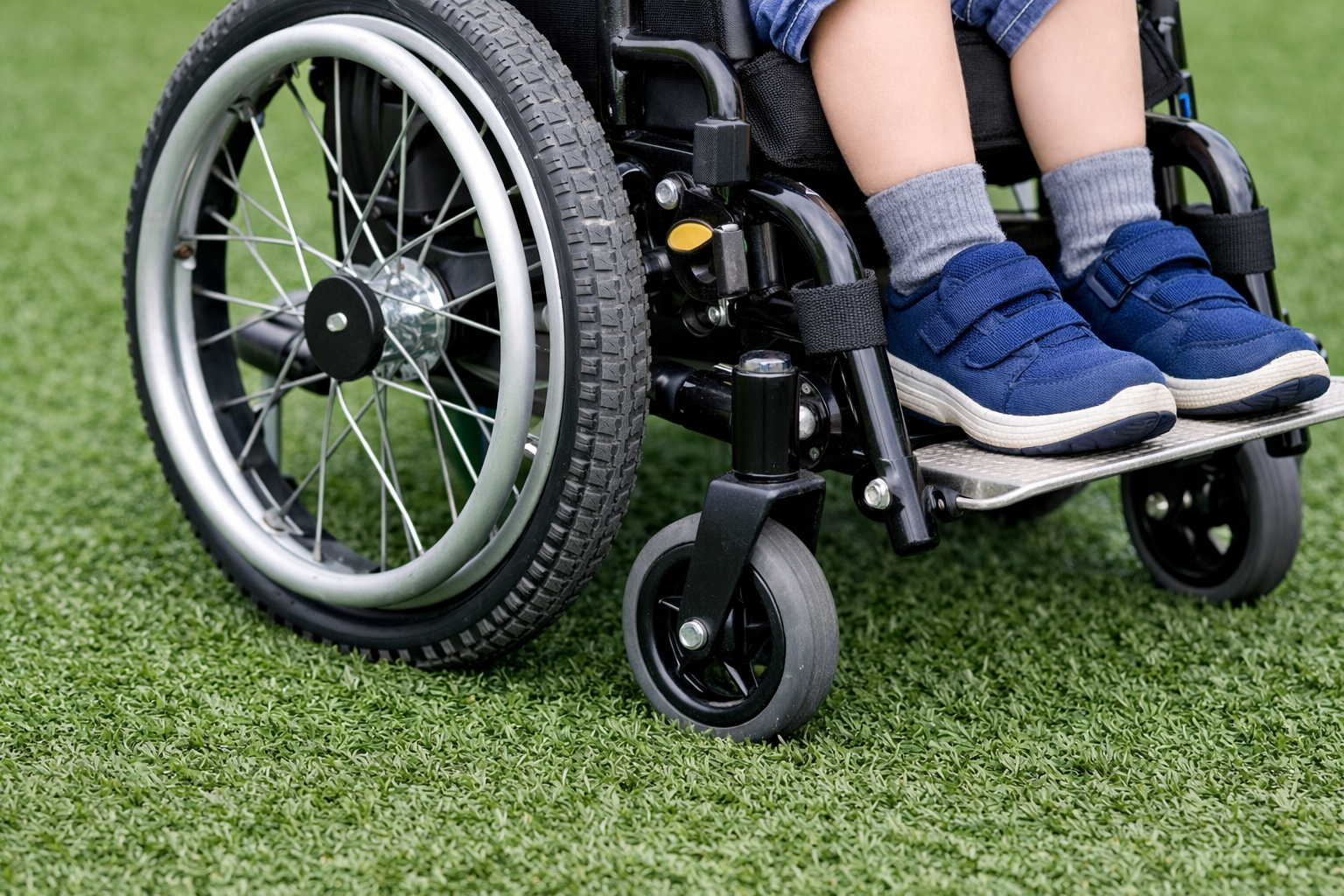
Designed for Everyday Accessibility
· Even, stable surfaces that let wheels move smoothly without catching
· Uniform support throughout heavily used areas and entry pathways
· Consistent, predictable movement when turning, starting, and stopping
· Inclusive by design—ideal for mobility devices, strollers, and walkers
How Accessibility Stays Consistent
-
Professional installation from the start of a project helps maintain a reliable surface.
-
Proper maintenance per product guidelines will keep the surface smooth over time.
-
Using drainage systems keeps surfaces dry and firm for smoother mobility.
-
Routinely inspecting surfaces helps catch minor issues (like depressions) before they affect mobility.

Frequently Asked Questions
Are you ready to bring accessibility into your design plan?
Contact us with any questions you may have!
